

When we tell people what we’re doing, they ask us a version of this question: Wait, is this a real thing?
Fair. Because when you first hear about it, the World’s Toughest Row sounds like something someone invented after too many drinks.
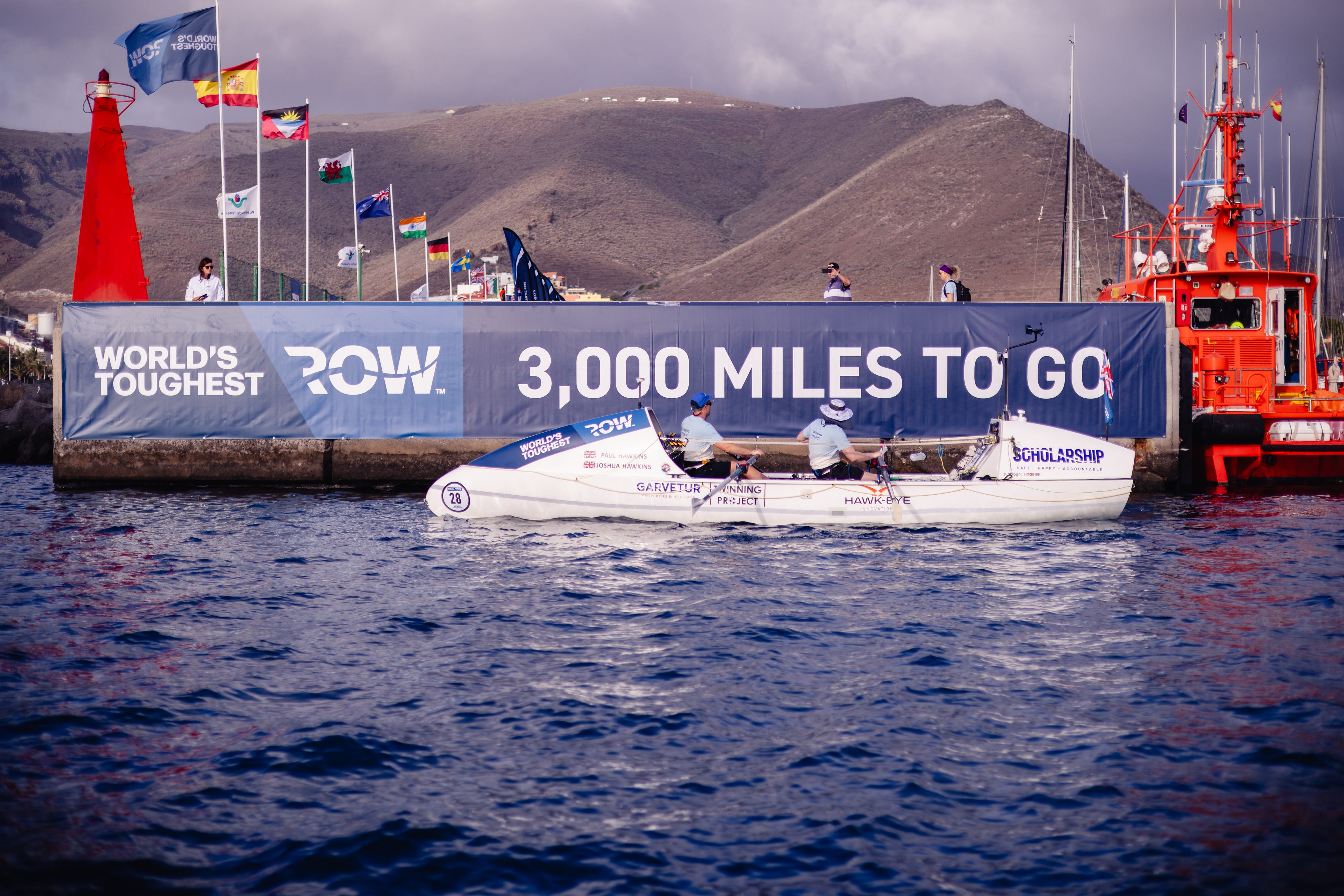
Two women. A 24-foot boat. Three thousand miles of open Atlantic. No motor, no sail, no support vessel. Just oars.

It’s real. It happens every year. And we’ll be at the starting line in La Gomera, Spain, in December 2027.
Here’s what we signed up for.
The Basics
The World’s Toughest Row is an annual unsupported (meaning you carry everything you need from the start; nobody is showing up halfway across with a resupply shipment) ocean rowing race across the Atlantic, organized by Atlantic Campaigns.
Teams depart from San Sebastián de la Gomera in the Canary Islands and row approximately 3,000 miles to English Harbour, Antigua. The crossing takes most teams somewhere between 40 and 70 days, depending on crew size and conditions.
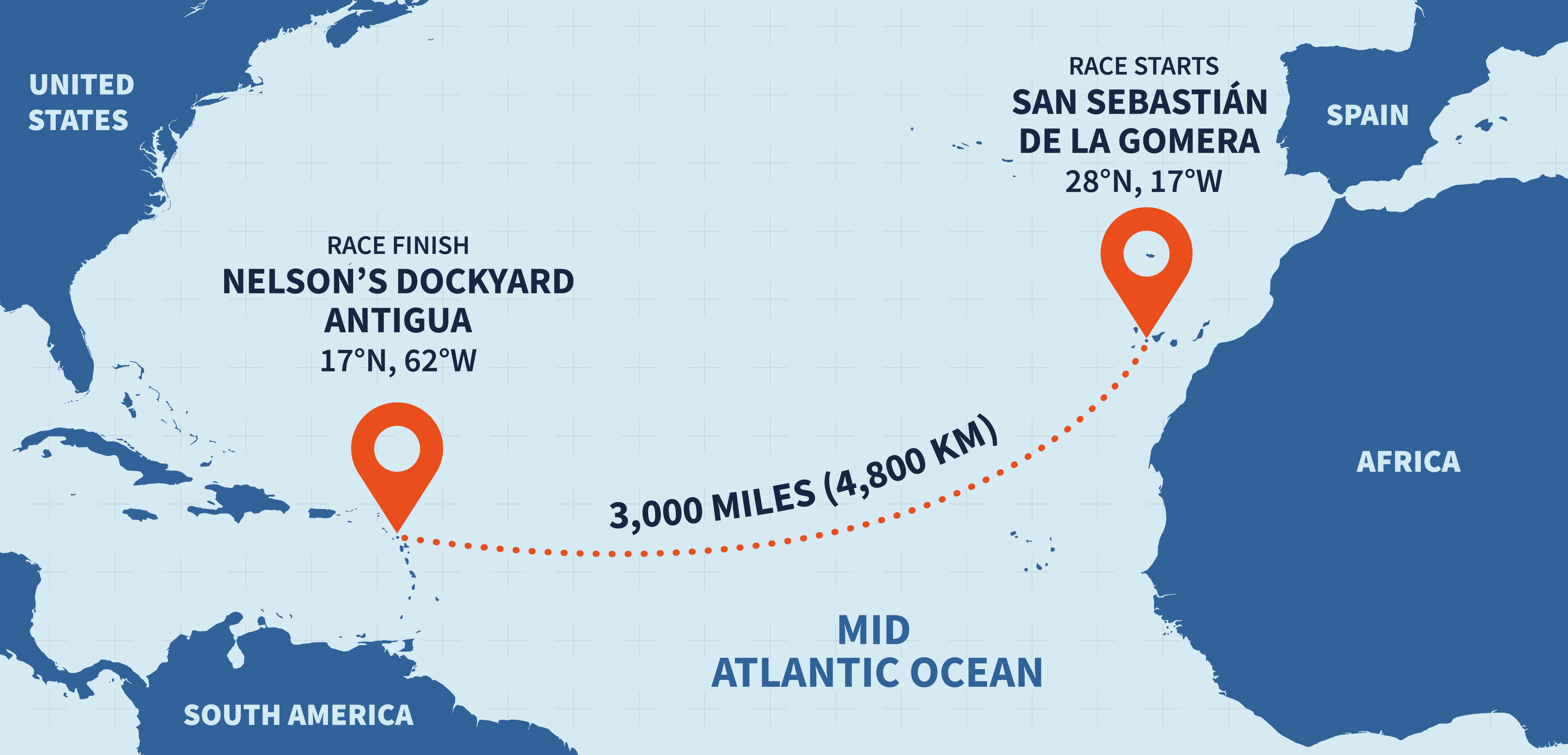
Teams range from solo rowers to crews of five, competing in men’s, women’s, and mixed classes. Winners are determined within each crew size, so pairs race against pairs, fours against fours, and so on.
The 2025 fleet had 43 boats. The 2026 fleet has over 50 teams signed up, and 2027 already has 45.
The boats are purpose-built ocean rowing vessels. They’re designed to be self-righting, which means if a wave flips the boat (and this happens), it rolls back upright on its own. Comforting in theory. I try not to think about it in practice.
What Makes It So Hard
The race earns its name.
Each rower burns upward of 5,000 calories a day and still loses an average of about 17 pounds over the crossing. Sleep comes in two-hour fragments between rowing shifts.
Salt sores, blisters, and chafing are guaranteed. Waves can reach 20 feet. The Atlantic is over five miles deep at its deepest point, which is one of those facts I wish I could unlearn.
Teams have dealt with marlin strikes. As in, a marlin spearing its bill through the hull of the boat. The 2024 race had 13 of them.
Rowers have hallucinated from sleep deprivation. They’ve rowed through storms, through calms that lasted weeks, and through headwinds that push you backward despite hours of effort.
And all of this is unsupported. There is no chase boat. No supply drops. You carry everything you need from the start, and you handle whatever comes. Repairs, navigation, medical issues, all of it.
Fewer people have rowed an ocean than have summited Everest, and it’s not close. Roughly 300 people have ever rowed any ocean. More than 7,500 have stood on top of Everest.
Where We Fit
Lauren and I will be racing in December 2027 as a pair. If we finish, we’ll be the first American female pair to row the Atlantic.
Our boat is the Penny B, an R25 built by Rannoch Adventure, the lead manufacturer of ocean rowing vessels, and currently stored in the UK. We’ll make multiple trips over the next year and a half to train on the water and complete the mandatory hours required by the race.
Our fitness coach, Gus Barton, and our boat coach, Dawn Smith, have both rowed this ocean and have been world record holders. We’re in good hands.
Our boat is being prepped. The training is underway. We can’t wait until it’s our turn.
This sounds terrifying! I both admire you and worry for your sanity. Best wishes