

Boat • Learning • Money • Personal • Team • The Race • Training
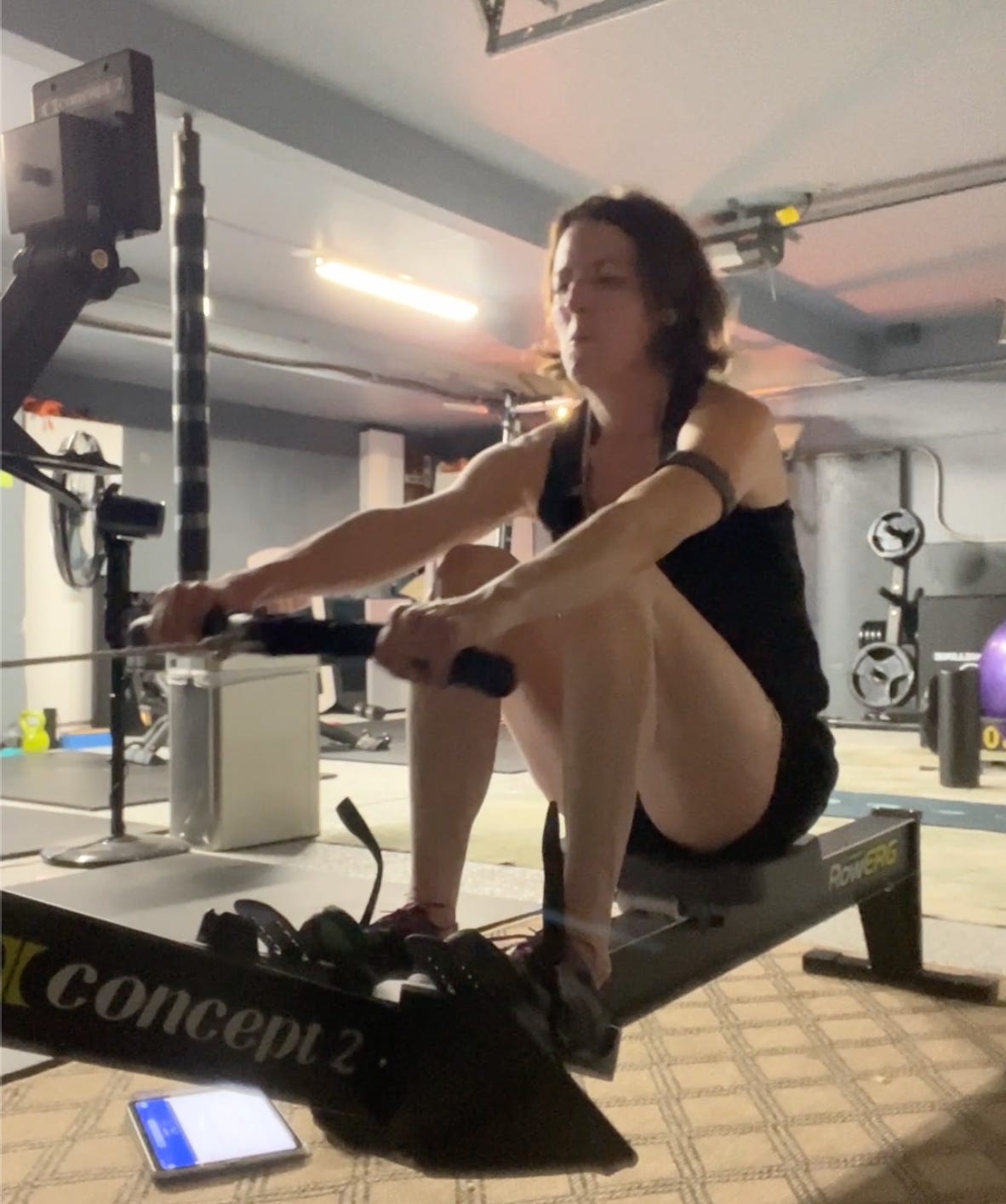
Lauren and I committed to WTR—as in, paid our $1,000 application fee each—on March 12, 2026. It took roughly two weeks for our payment to go through and for the WTR to give us access to their Hub, which is where all the race information lives.
In that time we were raring to get started with whatever we could, and being brilliant, we knew the physical part was a huge component of getting through 3,000 miles. So we did what anyone would do: we asked AI to give us a training plan.
I won’t lie, the plan we got wasn’t half bad.
What AI gave us — Cardio: Two Zone 2 erg sessions and one interval erg session per week. All rowing, all the time, right from day one.
What AI gave us — Strength (3 sessions/week, each a different focus):
Session A – Pull & Posterior Chain: Deadlifts: 4 × 6–8 · Barbell rows: 4 × 8–10 · Seated cable rows: 3 × 12 · Face pulls: 3 × 15 · Farmer’s carries: 3 × 40m
Session B – Push & Core: Back squats: 4 × 6–8 · Overhead press: 3 × 8–10 · Dumbbell bench press: 3 × 10 · Pallof press: 3 × 12 each side
Session C – Endurance Strength & Stability: Single-leg Romanian deadlifts: 3 × 10 each · Bulgarian split squats: 3 × 10 each · TRX rows: 3 × 15 · Side planks: 3 × 30–45 sec each · Dead hangs / grip work: 3 × max hold
AI gave me video examples of the exercises and it honestly worked pretty well. I did this for about six weeks.
Then the WTR race directors mentioned in a general meeting that anyone who wasn’t an experienced rower should really get themselves to a rowing club so someone could show them form basics.
Not many rowing clubs near the landlocked states of Colorado or Missouri. So we decided to go with an online coach. The WTR suggested two:
Gus Barton: gusbartonfitness.com Ed Raymond: garage852.com
Both Gus and Ed have done the WTR in previous years and have coached multiple ocean-rowing teams. Gus is in Canada, Ed is in the UK.
We interviewed with both but ultimately went with Gus. He was a little more hard-edged and tough-love than Ed, and that was something both Lauren and I responded to. (Although Ed was super nice and about half the price of Gus, so it was a tough decision.)
Gus’s three foundational pillars are:
Technical efficiency — making every stroke count instead of wasting energy
Aerobic capacity — being able to sustain effort for hours, days, weeks
Postural integrity — core strength, flexibility, and everything lining up right in movement. Helps prevent injury and reduces fatigue.
For a team with serious previous injuries (Lauren) and almost all muscle lost due to menopause (me), that third one was key.
So How Different Is a Real Coach From AI?
The honest answer surprised me. The exercises overlap more than you’d expect.
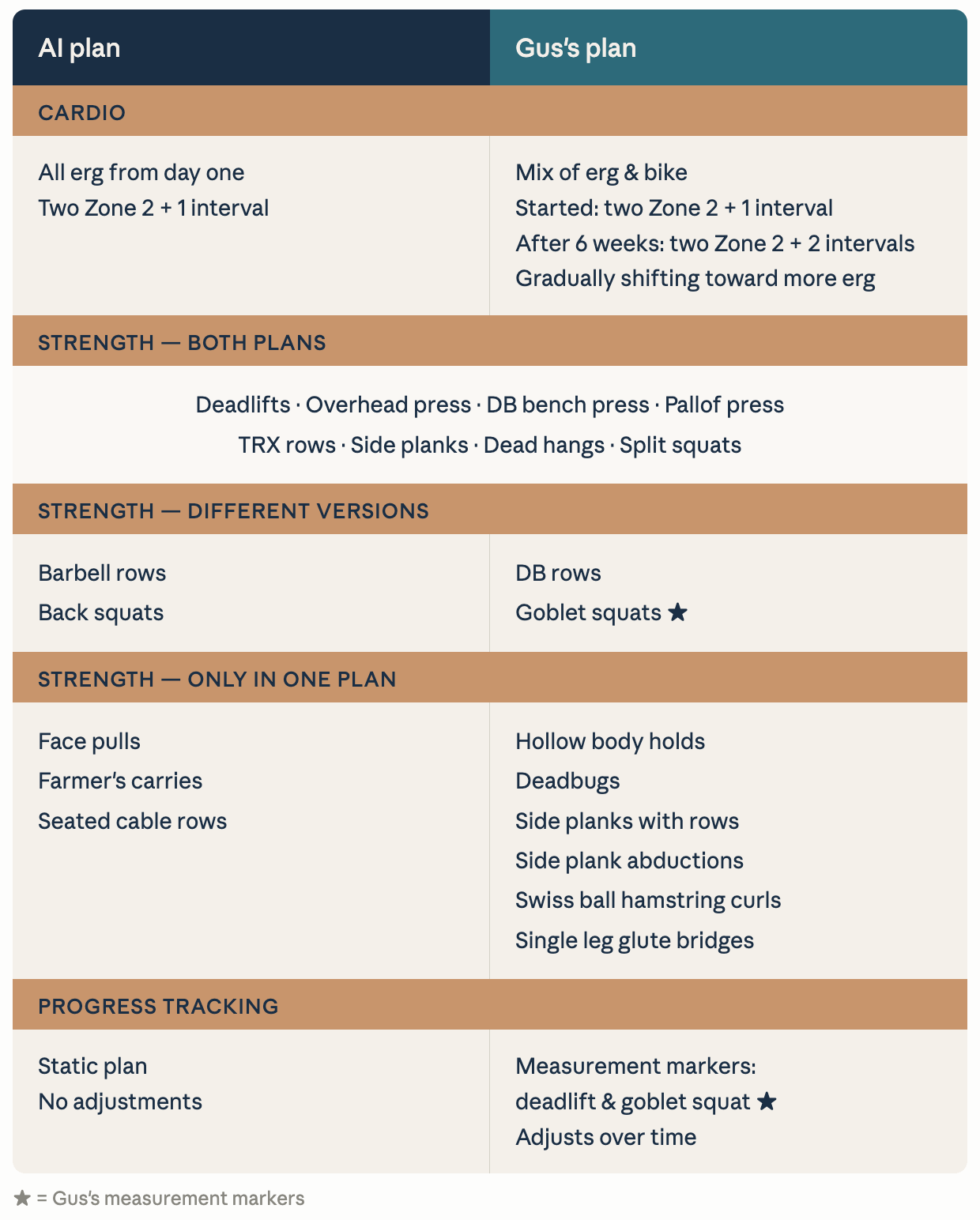
What both plans include: Deadlifts, overhead presses, dumbbell bench press, pallof press, TRX rows, side planks, dead hangs, split squats.
Where they diverge on the same exercises: AI gave me barbell rows — Gus does dumbbell rows. AI programmed back squats — Gus has focused on goblet squats. Small differences, but Gus has his reasons for each.
What AI included that Gus didn’t: Face pulls, farmer’s carries, seated cable rows.
What Gus includes that AI never thought of: A LOT more core and glute work. Hollow body holds, deadbugs, side planks with rows, side plank abductions, swiss ball hamstring curls, single leg glute bridges. The sheer volume of ab and glute-specific work in Gus’s plan dwarfs what AI gave me, and it goes straight back to that third pillar — postural integrity.
The cardio approach was telling too. AI had me on the erg for every cardio session from day one. Gus didn’t. He started me with two Zone 2 sessions and one interval, mixing erg and bike. After six weeks, we added a second interval session and started shifting more toward the erg.
I’m guessing he knows that 18 months of nothing but rowing machine might cause extreme burnout before you ever touch the ocean.
The Real Difference
Gus also tracks specific measurement markers: deadlift and goblet squat numbers that he uses to gauge progress. AI gave me a plan. Gus is building toward something specific and adjusting as we go.
But the biggest gap between AI and a real coach had nothing to do with the strength plan at all. It was our rowing form. And boy did we need help.
That’s a whole post of its own.